
A Phoenix-area search for used cars for sale near Phoenix, AZ displays 34,158 vehicles. That gives you a wide starting point, whether you’re looking for a car, truck, SUV, or minivan. The key is narrowing your search around the kind of vehicle that fits your everyday needs.
Choosing a vehicle online can feel like a lot to sort through. You may be comparing new, used, and certified pre-owned options while weighing space, comfort, and how you plan to drive. This guide will help you understand what to look for and how to make your search more manageable.
Browse by vehicle type, compare pre-owned options, and focus on details that matter in each listing. A consistent process can turn a broad search in Phoenix, Chandler, Mesa, Tempe, Queen Creek, or San Tan into a practical shortlist.
Key Takeaways
- Start with the vehicle type that fits your daily needs, then narrow online listings by the features that matter most.
- Compare owner reviews, safety ratings, and vehicle history reports to build a fuller picture of a used vehicle.
- Learn how new, used, and certified pre-owned options differ so you can focus on the right kind of inventory.
- See which factors shape used-car prices and how to compare listings across Phoenix, Mesa, Tempe, and Scottsdale.
- Explore used-vehicle options alongside an auto financing application and credit help as you plan your next step.
Looking for Cars for Sale Online in Phoenix, AZ?
A Phoenix-area online search displays 34,158 vehicles. Narrow the results by body style, brand, mileage, and location before comparing individual listings. If you’re considering Toyota, compare similar models and years rather than relying on the brand name alone. A sedan, truck, SUV, or minivan can suit different routines, so start with the space and driving needs that matter to you.
Read owner reviews for recurring comments about comfort, visibility, fuel use, and everyday convenience. Reviews reflect individual experiences, not a guarantee that every vehicle will perform the same way. Compare safety ratings for the specific model year and trim, since a rating for one version may not apply to another.
Request a vehicle history report and match its vehicle identification number, or VIN, to the listing and the vehicle. Review recorded ownership, title, accident, and service details. A report is useful, but it does not replace an in-person inspection. Consider the reviews, safety information, and history records together.
To find vehicles at other showroom locations, use the listing’s location filter and read the vehicle details carefully. The Phoenix-area showroom address listed in the market information is 614 E. Auto Center Dr, Suite 101, Mesa, Arizona 85204. Ask for the vehicle’s exact location before planning a visit, especially if a listing appears under another city.
Warranty coverage depends on the vehicle and the terms of its sale. Read which parts are covered, how long coverage lasts, and what exclusions apply. Extended vehicle protection is a separate purchase. Compare its written terms with your ownership plans instead of assuming it covers every repair.
Arizona emissions-testing requirements depend on where the vehicle will be registered and whether that location is in an emissions-control area. Before finalizing a purchase, check how the vehicle and registration address affect testing.
Budget for applicable taxes and transaction charges, which may include title and registration costs and, where applicable, dealer documentation fees. The total depends on the purchase and registration details, so review every item in the final paperwork.
You can arrange a pre-purchase inspection before buying from a private seller. The cost depends on the mechanic, the inspection’s scope, and whether diagnostic testing is included.
For a private-party purchase, match the seller’s identification to the title and compare the title and vehicle VINs. Arrange an independent inspection, then review the title details and complete the payment and ownership paperwork together.
Be cautious if a seller pressures you to send a deposit before seeing the vehicle, the VIN differs across records, or the seller’s name does not match the title. An unusually low price is a reason to examine a listing closely, not proof of a bargain.
New, used, and certified pre-owned inventory
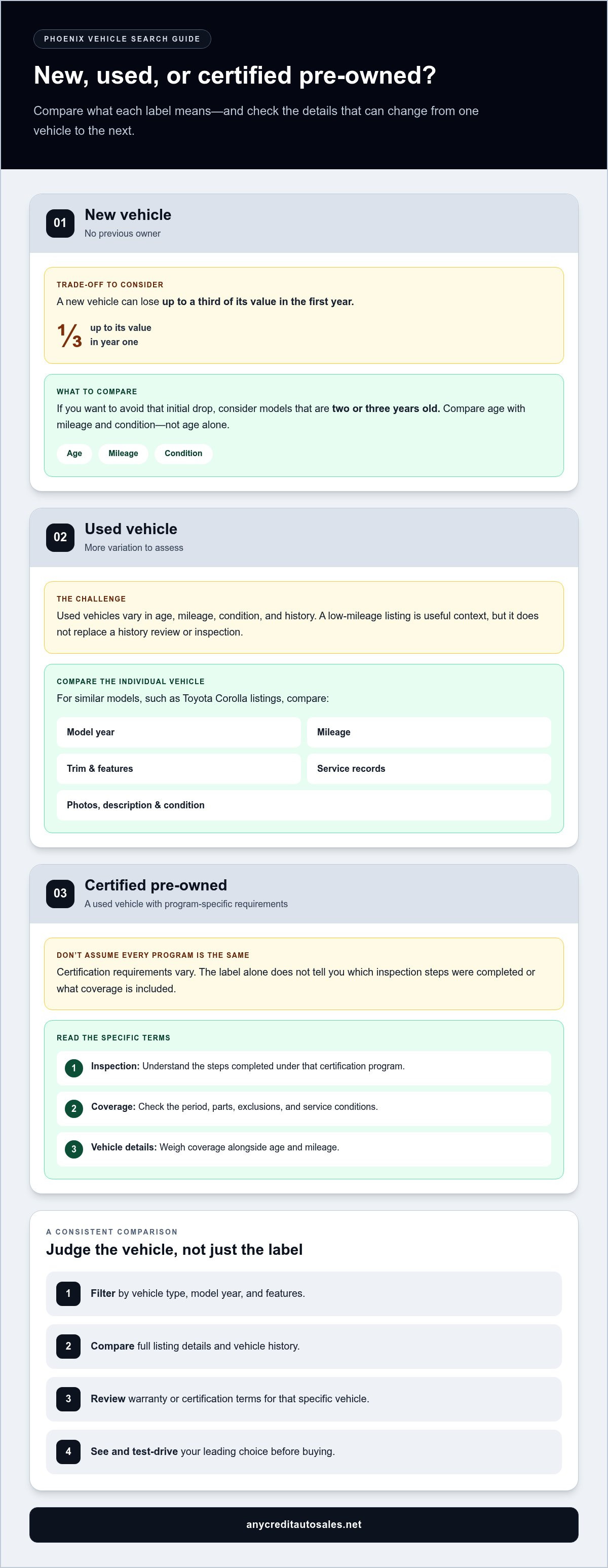
Online listings may include new, used, and certified pre-owned vehicles, but these labels describe different choices. A new vehicle has no previous owner. A used vehicle has had one or more, so age, mileage, condition, and history vary. Certified pre-owned vehicles are also used, but meet a particular certification program’s requirements. Compare the specific vehicle and terms, not just the label.
A new vehicle may suit you if having one with no previous owner is a priority. Consider depreciation, too: new vehicles can lose up to a third of their value in the first year. If you want to avoid that initial drop, you might consider models that are two or three years old. Compare age with mileage and condition, since age alone doesn’t show how a vehicle was driven or maintained.
Used inventory offers more variation to assess. For example, compare Toyota Corolla listings by model year, mileage, trim, service records, and included features. Review the photos and descriptions for differences in condition. Lower mileage is useful context, but it doesn’t replace a history review or inspection. Before comparing similar vehicles, make a short list of must-have features.
Certified pre-owned vehicles can offer a middle ground between new and standard used options. Requirements vary by program, so read the listing terms to understand the inspection steps completed and any coverage included. Don’t assume every certified vehicle has the same warranty. Compare the coverage period, parts, exclusions, and service conditions alongside the vehicle’s age and mileage before deciding whether certification suits your priorities.
Use a simple comparison process. Filter results by vehicle type, model year, and features. Compare the full listing details and vehicle history, then review the warranty or certification terms for that specific vehicle. Before buying, arrange to see and test-drive your leading choice. This keeps your decision focused on what the vehicle offers, not just its label.
If you’re ready to focus on pre-owned options, browse used vehicle choices and compare listings against your needs. A clear shortlist makes it easier to weigh condition, features, and coverage side by side.
Featured listings show how varied pre-owned options can be. Look beyond a vehicle’s year and label: mileage and asking price are separate details to consider in each listing.
Before deciding which option fits your priorities, compare each vehicle’s description, condition information, and any stated coverage or history. A listing helps you identify candidates, but checking the individual details matters when vehicles differ in age, style, and price.
Used cars, trucks, SUVs, and minivans in Phoenix
Choose a vehicle based on the jobs it needs to handle around Phoenix. A car may suit commuting and easier parking; a truck may work for hauling or bulky gear. An SUV can provide a higher seating position and flexible cargo space, while a minivan can make passenger access and family errands easier. Start with your regular trips, passengers, and belongings, then compare body styles that meet those needs.
For a car, compare cabin space, trunk access, visibility, and comfort on your usual drive. A compact sedan may be easier to park than a larger model, while a hatchback can make loading groceries or sports equipment simpler. Check the rear seats if you often carry passengers. Bring a typical bag or child seat to see how it fits.
For trucks and SUVs, consider the people and items you carry most often. A truck’s bed and cab layout affect how it works for jobs or weekend projects. An SUV’s seating and cargo area matter if you switch between carrying passengers and gear. Compare the vehicle’s dimensions with your garage or regular parking space, then test it on familiar streets and turns.
- Car: Compare passenger room, trunk shape, and parking fit.
- Truck: Consider cab space, bed access, and the gear you carry.
- SUV: Check seating flexibility, cargo access, and visibility.
- Minivan: Try the sliding doors, seat access, and cargo layout.
For a minivan, try each passenger door and seating arrangement. See whether you can reach the back row and load everyday items without rearranging seats. If you regularly use a stroller, sports bag, or work equipment, bring one when viewing the vehicle. Checking the fit in person is more useful than judging cargo space from photos alone.
Compare listings within the same vehicle type before deciding. Put two used SUVs side by side and review their model year, mileage, trim, features, and condition. Trim affects included equipment, so read each description closely. Save your strongest candidates and compare them against your needs, not appearance alone.
Before a Phoenix-area test drive, make a short checklist: seat comfort, mirror adjustment, visibility, air conditioning, and cargo access. Try the controls and listen for unfamiliar sounds during the drive. If comparing a car with an SUV or minivan, repeat the same checks in each to make a practical, consistent choice.
What is the average price of a used car in Phoenix, AZ?
A single average can hide how widely used-car listings differ. A compact Toyota Corolla and a full-size Ford F-150 serve different needs, so their asking prices aren’t directly comparable. In Phoenix, judge a vehicle against similar listings with the same model, trim, age, mileage, and condition. That gives you a more useful local comparison than one market-wide figure.
Start with a specific vehicle type and model. For example, compare Toyota Corolla sedans with other Corollas rather than mixing them with SUVs or trucks. Match the trim and model year as closely as possible, then review mileage, service records, title details, and visible condition. These details can explain why listings for the same model have different asking prices.
Condition can change the comparison. A vehicle with documented maintenance and a clean interior may differ from one that needs visible repairs. Check listing photos for worn seats, damaged body panels, or missing features. Read the description for maintenance details and compare them with the vehicle history report. Low mileage alone doesn’t prove better value.
Features also affect what you’re comparing. A Toyota Corolla with a different trim may include different comfort or technology options. A Ford F-150’s cab, bed, and equipment can change its usefulness for work or family errands. Compare listings with similar configurations before deciding one is priced higher or lower than expected.
Use this simple process to build a fair comparison:
- Pick a model and body style that match your needs.
- Gather Phoenix listings with similar model years, trims, and mileage.
- Review condition, service records, title history, and included features.
- Compare asking prices only after matching those details.
After comparing listings, consider the full purchase amount, not just the advertised price. Taxes, title, registration, and other transaction charges can affect the total. Keep these costs separate from the asking price when comparing similar Corollas.
To judge whether a listing offers fair value, note how it differs from comparable Phoenix-area vehicles. A higher price may reflect trim, condition, or included features; a lower price calls for a closer look at history and condition. This comparison gives you a clearer basis for deciding which vehicle fits your needs and budget.
How do used car prices in Phoenix compare with nearby cities like Mesa, Tempe, and Scottsdale?
Compare listings in Phoenix, Chandler, Mesa, Tempe, Queen Creek, and San Tan using similar vehicles, not city averages. A Phoenix Corolla isn’t directly comparable to an SUV in Chandler or a truck in Mesa. Model, trim, age, mileage, condition, and included features all affect asking prices. Match those details first to see whether location makes a meaningful difference.
Build a small comparison set for one make and model. For example, search Toyota Corolla listings across Phoenix, Chandler, Mesa, Tempe, Queen Creek, and San Tan. Keep model year, trim, and mileage as close as possible. Note each vehicle’s condition, service records, title details, and equipment. If one listing has a different trim or more extensive maintenance records, account for that before comparing asking prices.
Distance can change the practical value of a listing. A vehicle in Tempe may be easier to view than one farther across the metro area. A listing slightly further out could require extra travel, time, or shipping arrangements. Compare the advertised amount with the effort and expenses involved in reaching the vehicle. Don’t assume a listing is a better deal simply because its location seems convenient.
Use this checklist for a fair city-to-city comparison:
- Match the vehicle: Compare the same make, model, trim, and body style.
- Match its condition: Review mileage, maintenance records, title details, and listing photos.
- Compare the total: Include travel or delivery arrangements and applicable transaction costs.
- Check the location: Confirm where the vehicle is available to view and test-drive.
Listings change, so compare Phoenix, Mesa, Tempe, and surrounding results close together in time. Save the details for each candidate, including its location and features. Then revisit the listings before making a decision. This keeps an older listing from skewing your comparison against vehicles currently offered in another city.
For example, a used SUV in Mesa may appear less expensive than a similar one in Phoenix at Any Credit Auto Sales LLC. Before treating the difference as a location-based saving, check whether the vehicles have the same trim, equipment, condition, and history. Differences in mileage or included features may explain more than the city.
Choose the strongest match by balancing condition, features, location, and the full transaction. Treat nearby-city listings as options, not proof that one city always costs less. A consistent comparison helps you decide whether a Phoenix-area vehicle suits your needs or another listing deserves a closer look.
Any Credit Auto Sales: Used Vehicles
Any Credit Auto Sales LLC offers used vehicles, an auto financing application, and credit help for shoppers considering their next vehicle. Once you know what matters most, explore the dealership’s pre-owned inventory and compare vehicles against your needs.
If you’re considering financing, Any Credit Auto Sales LLC can help you submit an application through third-party lenders. The dealership does not offer buy-here-pay-here financing. Its credit help guides shoppers with different credit profiles as they consider loan options. These services can help you move from comparing vehicles to exploring a purchase while keeping your budget and priorities in view.
Contact Any Credit Auto Sales LLC to discuss your used-vehicle search and next steps.
Take Your Next Step With Confidence
Before moving from browsing to buying, decide what matters most. Set priorities based on how you’ll use the vehicle, which features you value, and what fits your budget. Keep your short list handy as you review options, so extra features or an appealing model don’t distract from your needs.
If you’re still comparing used cars for sale near Phoenix, AZ, take the time you need to choose a direction that feels right. You can also connect with Any Credit Auto Sales as you consider your next move. A clear conversation can help you understand the steps ahead and decide what you’d like to explore next.
Contact Any Credit Auto Sales to continue your vehicle search. Your next good decision starts with the needs that matter to you.
Frequently Asked Questions
Where can I find used cars for sale near Phoenix, AZ?
Browse pre-owned vehicles online from Any Credit Auto Sales LLC, based in Chandler and serving shoppers in Phoenix, Mesa, Tempe, Queen Creek, and San Tan. Review the inventory to find vehicles that fit your needs. If you’re considering financing, submit an auto financing application to connect with third-party lenders.
What are the best websites for finding used cars near Phoenix?
Dealership websites are a practical place to start: they show the vehicles available through that business and provide a direct path to the next step. Any Credit Auto Sales lets shoppers browse pre-owned inventory online and submit an auto financing application. Save listings that fit your needs, compare them, and decide which vehicle to explore further.


